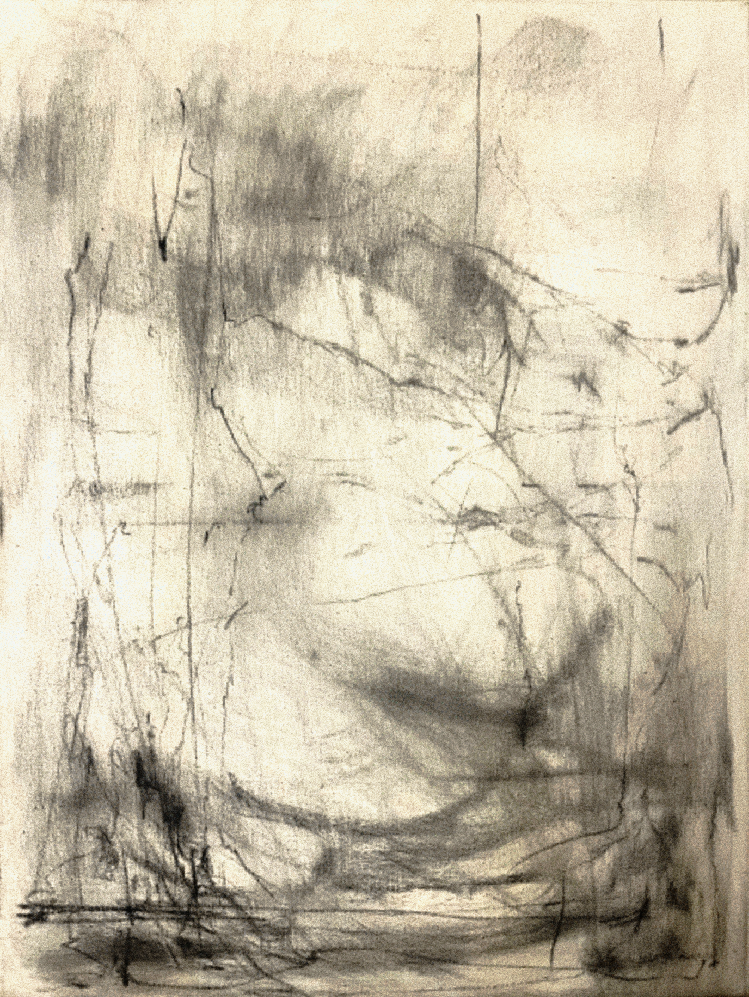
 A
AIt is an inadquate word and theory, it is all encompassing, it is boring, it is fascinating, it a two headed snake chasing a tail that doesn't exist, looking to swallow itself. Time is hungry, but feels so full when I hold the moment between my arms. It betrays me with promises in the rearview mirror. It stopped being a horizontal flat line I could draw between two points, past and future for some time now. Time started to pull itself into the vertical but I am free falling into its vertical and when I'm smiling it feels like I'm floating, and when I'm not, well I shut my eyes.
When I open them the only evidence its happened -- time has happened -- are a few more freckles and some fine lines around my eyes. The body is a place where time can make sense, the earth and its seasons too, but in the mind where memory can revive itself from the slumber of the past time has no sense. But Im not sure we were made to make sense of time, just feel it, let it wear us away or wear us into something like a refinement. it is a beating of a wave against a rock. it is a sunrise and sunset.
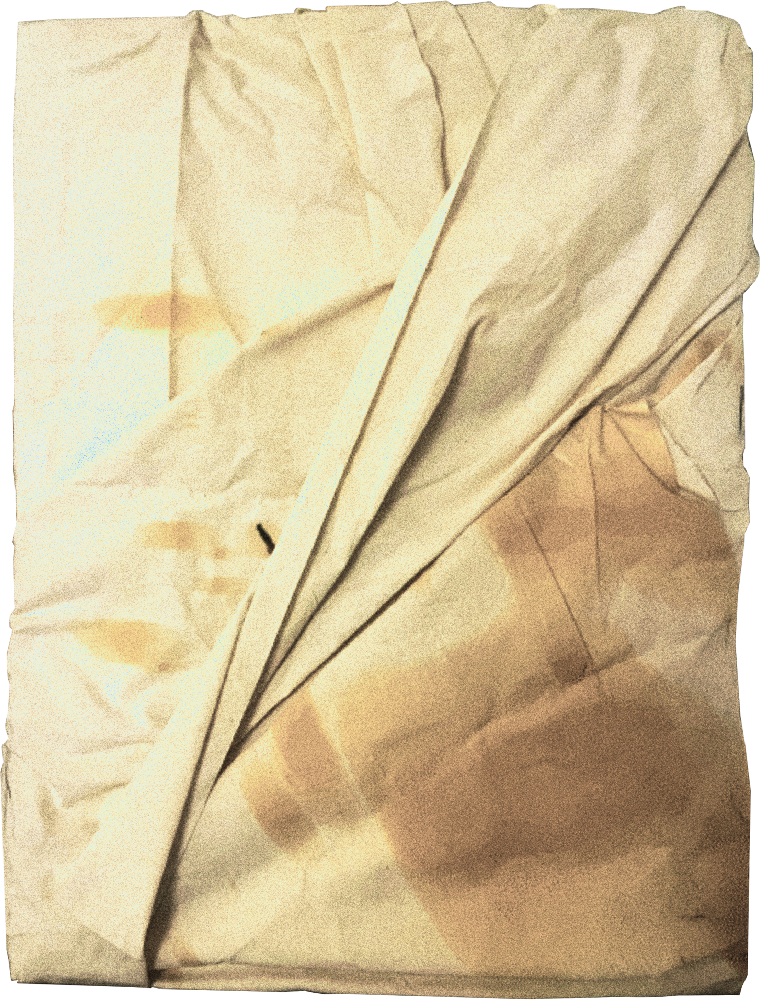 B
B
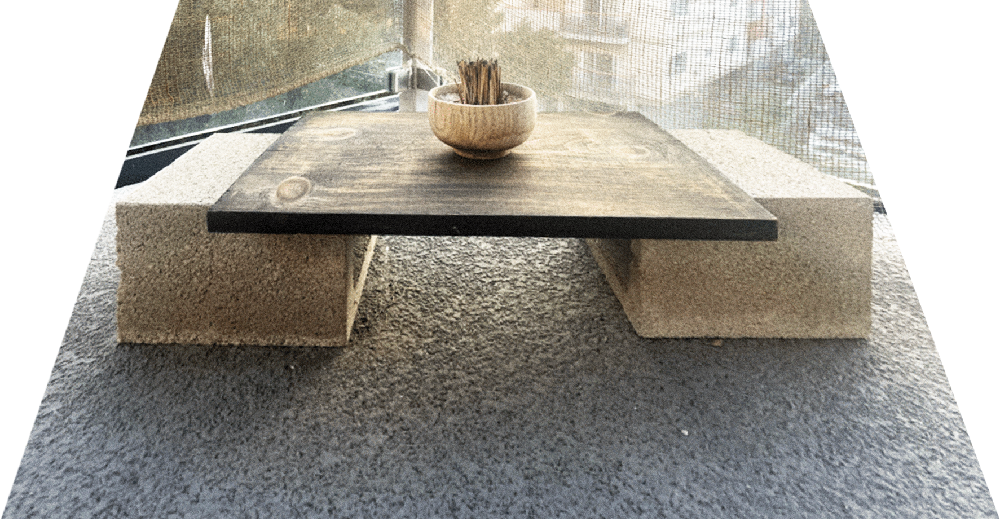
Ligne de Fuite et Trinitéis an installation consisting of two canvases and a devotional structure, composed as a three-part form. The configuration references time and trinity: the exposure of ritual and return, as a line of flight. Duration. Decay. Devotion. Here, time operates as Deleuze and Guattari describe as a line of flight or ligne de fuite: from the unrelenting present, relief is found through one’s reorientation within it. Inextended stillness the pull of habit loosens, the boundaries of the self become less insistent ,and attention shifts. Ash gathers, stains spread, surfaces fade: these changes function as points de fuite, moments where attachment thins and experience opens outward.
 C
C
The altar’s daily use and the canvases’ accrued residue form a system that neither progresses nor resolves, but gently deterritorializes, inviting a lived sense of time that is endured and shared rather than demarcated and possessed.
Devotion is a line through time: a recurring gesture that cuts through oppressive stasis. A return that does not advance, but situates. A small, daily alignment when larger structures feel ungrounded.The dialogue between the canvases and the altar reveals a quiet oscillation. The materials are heavy with use, with contact, with erosion. And yet the acts they hold: marking, staining, burning are light and fleeting.Time passes, residue accrues in the presence of absence. There is a line of flight. There is a mark on a map.The distance between devotion and decay is thin. What separates the two, is the duration we are willing to stay.